5 Things to Tell Your Players Before a Live-Streamed Tournament Game
The first time your team plays in a fully live-streamed tournament, the pre-game locker room feels different. Some players tighten up. Some overplay. A few pretend they don't care, then check the YouTube view count between quarters.
I've watched enough of these to have a short list of things worth saying before tip-off. Nothing revolutionary. Just five talking points that keep players in the right headspace when they know the game is being recorded forever.
1. Play the game, not the camera
This is the most important one. Some players see a live stream and start hunting stats. They force shots. They pass up better options because the assist doesn't get the highlight clip. They stop playing defense because defense doesn't go viral.
Say this out loud: "The camera is on. It's on for the whole game. The best thing you can do is play the way you always play. Coaches watching this can tell the difference between a kid playing basketball and a kid performing for the camera. They're not scouting for highlights. They're scouting for basketball players."
2. The film matters more than the outcome
Every game your program plays in a live-streamed tournament produces an artifact that lives for years. College coaches will pull up that game tape 6, 12, 18 months from now. Your seniors' recruiting depends on how they play tonight. So do your sophomores' futures.
Reframe it: "Nobody watching this tape is going to remember whether we won by 8 or lost by 3. They're going to remember how our players played. If we lose, we lose. If we win, we win. Either way, the film gets watched. Play like the film matters."
This helps in a specific way: it reduces the "we have to win this game" panic that shows up in the fourth quarter of close tournament games, where players tighten up and stop playing their game.
3. Defense is on the tape too
Every player knows their offensive numbers get remembered. Very few think about the fact that their defensive possessions are ALSO on YouTube forever.
Point it out: "Every time you get beat backdoor, that's on the tape. Every time you help off your man and give up a corner three, that's on the tape. Every time you close out under control, get in a stance, and force a tough shot, that's on the tape too. Coaches are watching defensive possessions specifically because they tell you what a kid actually is when it's not their turn to shoot."
D2 and NAIA staffs in particular scout defensive tape closely. It's their way of separating similarly-skilled offensive players, whoever plays actual defense gets recruited.
4. Body language is on the tape
The most-overlooked category. When your point guard turns the ball over and puts his head down for eight seconds walking back on defense, that's a whole scouting story right there.
Coaches at every level watch body language during adversity. It tells them what a kid is like at 6:30am practice in February.
Say: "When something goes wrong tonight, a bad call, a missed shot, a turnover, how you react in the next 5 seconds matters more than the mistake did. The camera catches all of it. Play the next play. Head up. Sprint back. That's the tell."
5. Nobody watching tonight has ever heard of you
Especially for players who aren't already on college recruiting boards, this framing changes everything.
"The coach watching this stream tonight, in Iowa or Ohio or Oregon, has never heard your name. They're going to make their first impression in the first four minutes of the game. That's your window. Play those four minutes like your career depends on them, not by trying to score every possession, but by playing your role at 100%. The coaches will notice."
The kids who get discovered from prep tournaments aren't usually the ones who scored 30. They're the ones whose first-quarter effort made a coach text his staff: "Watch #14 for me."
What to leave out of this conversation
A few things NOT to say before tip-off:
- Don't tell them specific coaches are watching. Even if you know one is, saying "Coach So-and-So from [Program] is watching tonight" spikes their heart rate and hurts their game. Let them play. Tell them afterward.
- Don't remind them of the stakes. They know. Repeating "this is a big one for recruiting" makes it worse.
- Don't give them a highlight reel to shoot for. "Try to get 20 points tonight" turns into a bad game every time.
After the game: the 90-minute window
The other half of the streaming era is what happens after. When your players finish the game, the tape is up on YouTube within a few hours (if the tournament production is decent). You have a 90-minute window to review the game with them while it's fresh.
Not to critique specific plays. To reinforce what they did well and to help them see themselves on the tape the same way a college coach will see them.
The follow-up recruiting play, the email you send to coaches with a highlight clip Monday morning, is where the tape actually pays off. We covered that whole workflow in the 24-hour recruiting email post.
Every game on YouTube. Free. Archived.
The National Prep Tournament streams every game and archives them for college coach review. Registration is $275 per team.
Register Your Team · $275The bigger point
The streaming era has changed prep basketball more than any single thing in the last two decades. The teams that thrive in it are the teams whose coaches prepared them for it. The teams that struggle are the ones treating live-streamed games like regular games and hoping for the best.
Five minutes of pre-game conversation on the front end saves you a lot of "why didn't he get looks?" conversations six months later.
Coach Lee
About Coach Lee DeForest
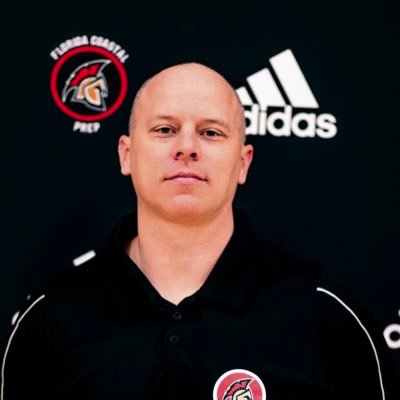
Coach Lee is in his seventh year as Director and Director of Operations at Florida Coastal Prep Sports Academy. With 25+ years of coaching at the D1, D2, NAIA, and JUCO levels, he has developed players who have gone on to programs including Missouri (Sean East, currently in the NBA G-League), DePaul, Houston Baptist, and SIU Edwardsville. He won a state championship in 2011 and is an Amazon best-selling author of 5 basketball coaching books, including the Princeton Offense Mastery Blueprint. Lee is a U.S. Army Reserve veteran. Kenny Anderson, NBA veteran and 1994 NBA All-Star, is on the FCP coaching staff.