How College Coaches Actually Recruit From Prep Tournaments
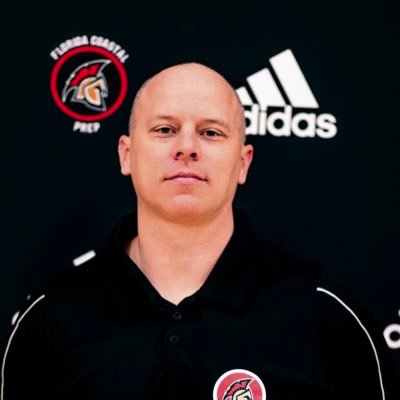
Every prep tournament marketing email promises the same thing: "College coaches in attendance." Most coaches reading this guide have seen that phrase a hundred times. Few have asked the harder question: what does "in attendance" actually mean for my players?
I've spent 12 years coaching and 5 of those running my own program. I've sent kids to D1, D2, JUCO, NAIA, and a handful to Europe. I've also hosted college coaches at our own events. The way recruiting actually happens at the prep level is very different from how it gets marketed, and once you understand the real process, you'll be in a much better position to decide which tournaments are worth entering and how to maximize the ones you do.
This article walks through how each level of college program scouts at prep events, what they actually look for in a 3-game sample, why live streaming has quietly become more important than in-person scouting, and how to position your players to get found.
The four tiers, and how each one recruits
Let's start here: D1 head coaches almost never travel to a prep tournament to scout an unknown player. They have a roster they're tracking, and the tournament is verification, not discovery. By the time a Power Five coach is at your tournament, the player they're watching has already been on their board for 6-18 months.
The other levels work differently, and you should plan accordingly.
D1 (especially mid and low-major)
D1 recruiting is film first, travel second. A staff assistant gets a recommendation or a coach email, watches 20-40 minutes of game film, then either deletes the email or escalates to the head coach. If a player makes it to the "go scout in person" stage, they're usually already a serious target.
At a prep tournament, you'll occasionally see D1 assistants, almost never head coaches. They're verifying physical traits (real height, real wingspan, real motor) more than evaluating skill. Skill they've already assessed on film.
D2
D2 is the level where prep tournaments matter most for live evaluation. D2 staffs are smaller, recruiting budgets are tighter, and they recruit regionally. A D2 coach in the Southeast will absolutely drive 6 hours to a weekend tournament if there are 3-4 players worth seeing.
D2 coaches will scout one full game and call it enough. They want to see decision-making in a real game, defensive effort when the score is tight, body language during a bad stretch.
JUCO
JUCO coaches are the most active in-person scouts at prep tournaments because their recruiting cycle is faster (1-2 year turnover) and their needs are constant. A good JUCO program might place 8-12 players a year into D1/D2. They're hunting volume.
If your tournament attracts JUCO coaches, your post-grad players have a strong shot at being seen by someone who can change their life in the next 18 months.
NAIA and DIII
NAIA programs are quietly excellent fits for a lot of prep players who aren't quite D1 material but are too good for community college. NAIA coaches travel widely, recruit aggressively, and offer real basketball scholarships (D3 doesn't). If you have players who can play but aren't getting Power Five looks, NAIA should be your primary focus.
What they look for in a 3-game sample
Here's what scouts at every level are evaluating in a short tournament window. Tell your players this. Print it out.
Body language during adversity
Every college coach I know watches a player's reaction to a bad play more closely than the play itself. A turnover happens. Does the kid sprint back, or hang his head? A teammate misses a clean look. Does the player encourage him, or pout?
If you have one piece of advice to give your team before a showcase, it's this: they're watching how you respond, not what happens.
Defensive motor when the score is uneven
It's easy to play defense when the game is tied with 2 minutes left. Up 22 or down 22, that's the test. Coaches notice the kid still closing out hard, taking charges, talking on defense in a blowout.
Decision-making in transition
The single most-overrated skill in high school basketball is "scoring." The single most-underrated is making the right pass at the right time. Coaches watch transition possessions to see if a player can read defense at speed.
Physicality and conditioning by game 3
Most tournaments are 3+ games across 2-3 days. By game 3, half the field is gassed. Players who are still moving at the same speed in their third game stand out, it's a signal of program training and personal habits.
How Live Streaming Changed Recruiting
The part most prep tournament marketing still misses: the live stream is now more important than the people in the gym.
Here's why. A D2 coach in Iowa can't fly to a Florida prep tournament to scout a kid. But she absolutely can watch the YouTube archive Tuesday night after practice. A JUCO coach in Texas can't be at every weekend showcase, but he can have his assistant pull clips of three players he wants to see.
The number of eyeballs a great game gets in the 30 days after a tournament, from coaches watching the archived stream, often exceeds the number of coaches who were physically in the gym.
This is why I get suspicious of tournaments that don't live-stream every game, or that put streams behind paywalls. They're operating on a model from 2015. (More on this in our buyer's guide.)
"When I was getting recruited, scouts had to actually show up. You played one bad game in front of the wrong coach and that was your shot. Now? A kid can have a quiet first game and explode in game three, and every coach who didn't fly out can watch it Monday morning. The streaming era is the most democratic thing that's ever happened in college recruiting." , Kenny Anderson, NBA veteran, current FCP staff
Kenny came up through the recruitment of the late '80s, Georgia Tech, lottery pick, 14 years in the league. When he says the streaming era is more democratic, he means it: kids from small programs in places like Fort Walton Beach can now get noticed by the same coaches who used to only fly to the big established tournaments. The bar is no longer "be at the right gym", it's "play your best game on tape."
How to make a tournament work for your player's recruiting
Knowing how scouts behave isn't enough. You also need a plan to maximize each tournament you enter.
Build the email list before you go
Two weeks before the tournament, you should have a list of 30-60 college coach email addresses who are realistic fits for each of your players. Not pipe dreams, actual programs at the right level. If you have a 6'5" wing with a 35% three-point shot and average athleticism, your list shouldn't include Kentucky. It should include 40 D2/NAIA programs in regions where he's open to playing.
Send the schedule before, not after
The week of the tournament, email coaches: "My player is at [tournament name] this weekend. He plays at 10am Friday, 2pm Saturday, and either 11am or 4pm Sunday depending on bracket. Free YouTube stream link: [link]. Roster #14."
That's it. You're not selling. You're informing.
Send the highlight clip Monday morning
If your player had a strong moment, a stretch in the third quarter, a clutch defensive sequence, clip it and send it Monday with a timestamp. Coaches won't watch 90 minutes of game on a stranger. They'll watch a 90-second clip and then maybe watch more of the full stream.
We have a full walkthrough on this in the post-tournament recruiting email guide, including a template you can copy.
How many recruits actually come from one tournament?
I get asked this directly: "If I enter my team, how many of my players will get college offers as a direct result?"
Probably zero come from a single weekend. Recruiting doesn't work that way.
What does happen, when you enter the right tournament and approach it correctly:
- 2-3 players get their first formal "we're interested" emails from college programs they weren't on the radar of before.
- 1-2 players who were already in conversations move from "interested" to "offer pending" status because the coach got the live verification they needed.
- Several players add 3-game samples to their existing film library that they'll use for the next 12 months of recruiting.
That's the realistic outcome from one good weekend. Stack 3-4 tournaments across a year and run the same playbook, and you've materially changed your team's recruiting trajectory.
If a tournament built around the stream sounds useful
The National Prep Tournament puts every game on YouTube, free, archived afterward. That's the recruiting backbone of the weekend. Registration is $275 per team.
Register Your Team · $275A final note
Don't enter a tournament hoping a college coach happens to be there. Enter a tournament knowing exactly which coaches you want watching, and run the playbook that puts your players in front of them, whether they're in the gym or watching from Iowa on a Tuesday night.
That's how recruiting actually works now. The coaches who figure this out are the ones whose players get the looks.
Coach Lee
About Coach Lee DeForest
Coach Lee is in his seventh year as Director and Director of Operations at Florida Coastal Prep Sports Academy. With 25+ years of coaching at the D1, D2, NAIA, and JUCO levels, he has developed players who have gone on to programs including Missouri (Sean East, currently in the NBA G-League), DePaul, Houston Baptist, and SIU Edwardsville. He won a state championship in 2011 and is an Amazon best-selling author of 5 basketball coaching books, including the Princeton Offense Mastery Blueprint. Lee is a U.S. Army Reserve veteran. Kenny Anderson, NBA veteran and 1994 NBA All-Star, serves on the FCP coaching staff.