The 2027 Prep Basketball Tournament Buyer's Guide: How to Pick a Tournament Worth Your Entry Fee
If you coach a high school or post-grad team, you've probably gotten the email. "Premier Showcase. College coaches in attendance. Limited spots. $495 entry." Then four more just like it. Different tournament name, same promises, same vague "elite competition" language, never any specifics.
I'm going to be direct: most prep tournaments are run by good people doing their best with limited resources, and a handful are run by promoters who count on you not asking hard questions. I've coached on both ends, entering teams and now running my own, and the difference between a tournament that's worth the money and one that wastes a weekend almost never shows up in the marketing copy. It's in the operational details nobody puts on the landing page.
This guide is the framework I wish I'd had when I started entering teams 12 years ago. Seven questions to ask. What good answers look like. What the red flags sound like. And yes, at the end I'll tell you where the National Prep Tournament we host fits in, including what we're not good at.
1. How many games are actually guaranteed?
Tournaments love the word "guaranteed." It's almost always followed by a number that sounds bigger than it is. "5-7 games guaranteed" means you might play 5. "Pool play plus elimination" can mean three games if you lose early.
What you want to ask: How many games minimum will my team play, in writing, regardless of how we perform?
A good answer is a specific number with no asterisks. 3 is honest. 4 is honest. "Up to 6" is marketing.
Why this matters
Because your math changes completely. A $275 entry for 3 games is about $92 per game. A $275 entry for 5 games is $55 per game. Divide that by travel costs, and the cheaper-looking tournament with more games may be the more expensive one if half the field is overmatched and you blow two of them out by 40.
2. How many courts? And is the schedule realistic?
This is the question that separates organizers who've thought it through from organizers who haven't.
A single-court tournament with 8 teams running pool play needs roughly 12 games in 3 days. That's doable, about 4 games a day, 90 minutes apart. Comfortable for everyone.
A single-court tournament that booked 20 teams is a disaster waiting to happen. You'll be playing at 7am or 11pm, and someone's catching a flight at the wrong time.
A four-court tournament with 32 teams sounds great until you realize the organizers don't have the staff to run four games simultaneously with competent refs on each.
Ask: How many courts? How many teams? Has this schedule been run before, or is it new this year?
For what it's worth: we run a single court at the National Prep Tournament. Twelve teams across two divisions, cap there, no exceptions. The tradeoff is obvious, we'll never be the forty-team mega-event. But it lets us run a clean schedule, put full production on each game, and seed the brackets so most games are competitive. If you want a giant exposure tournament with hundreds of college coaches in the gym, this isn't that. If you want a tight weekend where every game gets the full treatment, it might be.
3. Who is actually refereeing?
The most-overlooked question on this list.
You can have a great venue, great competition, great accommodations, and a single bad ref crew can put your point guard on the bench with three fouls in the first quarter, kill momentum, and waste your weekend.
Ask: Who's running the refs? Are they hired through a local board, or whoever the organizer could grab? Same crew all weekend, or rotating in and out?
Ask whether officials are certified, hired through a local board, and supported by a designated commissioner. Press for details if the answer is "We have local refs we use every year" with no further detail.
4. Are college coaches actually coming, or "in attendance"?
This is the line in tournament marketing that takes the most squinting at. "College coaches in attendance" is almost never verified. Tournaments list logos of programs that have sent a coach once in the past five years. Some list logos based on a coach RSVPing yes, and not coming.
The way recruiting actually works at the prep level (more on this in our recruiting deep-dive): D1 coaches rarely travel to scout an unknown player at an unknown tournament. They get game film, then travel if interested. D2 and JUCO coaches will travel if it's close enough to drive. NAIA coaches go almost anywhere local.
Ask: Which specific coaches confirmed attendance for the 2027 event? Can you put me in touch with a coach who attended last year?
If the answer is vague, the answer is no.
5. Is every game live-streamed (and is the stream actually good)?
If a tournament isn't streaming every game, you're losing the biggest part of what makes modern tournaments valuable.
Live streaming matters more than in-person scouting for one simple reason: your best games get more eyeballs from college coaches on YouTube the week after the tournament than they would from coaches walking by your court live. A D2 coach in Indiana can't fly to Florida to watch your kid. But she can watch the second-half explosion on a clip you sent her at 9pm Monday.
Ask: Is every game streamed? On YouTube or behind a paywall? Are the streams archived afterward? Is there scorebug graphics or just the raw camera?
Free YouTube with a scorebug is the standard worth looking for. Paywalled streams (FloHoops, BallerTV) limit who can watch your kids without paying $15/month. Some tournaments don't stream at all and call it "tradition," but it usually means production wasn't budgeted for.
6. Is there real recognition, MVPs, All-Tournament teams?
Players play harder when there's something to play for beyond the score. Game MVPs and an All-Tournament Team selection give coaches something concrete to put in recruiting emails and players something to chase.
Ask: Are there game-by-game MVPs? Is there an All-Tournament Team selected? Who selects it? Do you provide a physical award or just a digital mention?
Tournaments that put real effort into recognition tend to put real effort into everything else.
7. Who is actually running this, and how long have they been doing it?
The last question, and the one most coaches forget to ask. Who is the person you can actually call when something goes sideways?
I've seen tournaments where the "director" was a Gmail address with no phone number. I've seen tournaments that listed an LLC name but no actual person. These are the ones that vanish when checks bounce or refs no-show.
Ask: Who is the tournament director by name? What's their background? Are they affiliated with a basketball program or are they just a tournament promoter?
I have a strong preference for tournaments run by people who coach. If they coach, they understand what coaches need. If they don't, they're optimizing for things that look good in pictures, not things that make weekends work.
One last thing on us
I'm going to skip the feature list since you can read about the format and pricing anywhere on the site. What I'll say instead: the seven questions above are the ones I'd want a coach to ask me before paying me money. I tried to design the tournament so the answers are good ones. That's the whole project.
What we're not is the biggest. We're not eight courts. We're not going to put your team in front of fifty D1 coaches in one weekend. If that's what your program needs, HoopGroup and Grind Session events serve that audience well. We're a smaller, tighter weekend, in a quieter beach town, with every game on YouTube and Kenny Anderson on our staff. If that fits what you're looking for, we'd love to have you.
If that sounds like the fit you're looking for
Registration is $275 per team. You can enter your team online.
Register Your Team · $275The framework, one more time
Whether you go with us or anyone else, the seven questions are the seven questions. Ask them out loud. If the answers are clear, specific, and verifiable, you're probably looking at a tournament that knows what it's doing. If the answers are marketing copy with no specifics, save your money.
Good luck out there. See you at tip-off.
Coach Lee
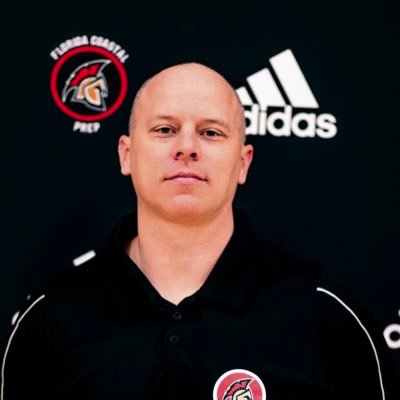
About Coach Lee DeForest
Coach Lee is in his seventh year as Director and Director of Operations at Florida Coastal Prep Sports Academy. With 25+ years of coaching at the D1, D2, NAIA, and JUCO levels, he has developed players who have gone on to programs including Missouri (Sean East, currently in the NBA G-League), DePaul, Houston Baptist, and SIU Edwardsville. He won a state championship in 2011 and is an Amazon best-selling author of 5 basketball coaching books, including the Princeton Offense Mastery Blueprint. Lee is a U.S. Army Reserve veteran. Kenny Anderson, NBA veteran and 1994 NBA All-Star, serves on the FCP coaching staff.