The 24-Hour Recruiting Email That Actually Gets College Coaches to Watch Your Player
The 24 hours after a great tournament game is a good time to contact college coaches. The performance is fresh, the live-stream archive is up, and your player just put real evidence of his ceiling on tape. The question is whether college coaches actually see any of it.
The answer is almost entirely about what you do with email between 9pm Sunday and noon Monday. This is the playbook.
The recruiting email that works
Here's the template. We'll break down why each line matters below. Replace the bracketed bits with your details. Send to one coach per email, never CC or BCC a group.
Subject: [Player Name], [Position], [Class Year], tournament tape from this weekend
Coach [Last Name],
[Player first name] is a [height] [position] in the [class year] class. He played 3 games at the National Prep Tournament this weekend (Fort Walton Beach, FL) and had a strong showing, finished with 22 points, 7 rebounds, and 5 assists vs. [opponent team name] in our second game.
Here's a 90-second highlight clip from that game:
[YouTube link with timestamp, e.g. https://youtu.be/abc?t=1240]
Full game archive (if you'd like to see more):
[YouTube link to full game]
Quick context on the player:
- GPA: 3.4, [SAT/ACT score if available]
- Currently a [grade]th grader at [school/program]
- Plays [position] but can guard [other positions if applicable]
- [1-2 sentence honest assessment of strengths]
If you'd like to set up a call or get more film, just reply and I'll send what you need. He's a kid worth your time.
Thanks Coach,
[Your Name]
[Your Title], [Your Program]
[Phone number]
Why each piece matters
The subject line
College coaches get hundreds of recruiting emails a week. Most have subjects like "Elite Point Guard 2027" or "MUST SEE PROSPECT." Those go straight to delete.
The subject line that works is descriptive and specific: player name, position, class year, what's in the email. "Marcus Smith, PG, 2027, tournament tape from this weekend" tells the coach exactly what they're getting in 9 words. They can decide in 2 seconds whether to open it.
"Coach [Last Name]"
Always use the coach's actual last name. Not "Coach." Not "Dear Sir." Names matter and signal that you've done basic homework.
If you're not sure which coach to send to: at D1 programs, send to the recruiting coordinator first (their email is usually on the program staff page). At D2/NAIA/JUCO, the head coach or assistant, either is fine.
The opening 2 sentences
Position, class year, what they did this weekend. Give the coach the answer to "should I keep reading?" in the first 3 lines.
The stat line is important not because the coach cares about the box score, but because it anchors the rest of the email. They'll click the clip looking for those specific moments.
The 90-second clip
This is the line that does the most work. Coaches won't watch a 90-minute game from a stranger. They'll watch 90 seconds.
You'll need to actually clip the highlights yourself or have your video coach do it. The YouTube link should have a timestamp parameter (?t=1240) so it jumps directly to the start of the highlight. The clip should be 60-120 seconds of the player's best 4-5 plays.
If the player had a quiet first half and a great second half, clip the second half. If they had a great defensive sequence, include it, coaches at every level care about defense.
Live streaming on YouTube is what makes this possible at all. Tournaments without good streaming archives kill your ability to run this play (more in our tournament buyer's guide).
The full game link
Include it for the 10% of coaches who, after watching the clip, want to see more. Don't make them ask. The full game link is your insurance policy against the "this kid had one good play in a highlight reel" objection.
The context block
4-5 short bullet points. Academic credentials, current school, position versatility, honest one-line assessment.
The honest assessment matters. Don't write "elite athlete with NBA upside" because college coaches translate that as "no real basketball IQ." Write something accurate like "uses physicality to finish through contact, still developing left hand", that builds credibility because it shows you actually evaluate your own players.
The close
"He's a kid worth your time" is intentional. It's a brief, confident endorsement that signals you're not spam-blasting every program in America. You're vouching for this specific kid.
The signature includes your phone number because the strongest recruiting moves happen on the phone, not on email. If a coach is intrigued enough to want to call, give them the option.
Timing: send Monday morning, not Sunday night
Two reasons. First, college coaches' Monday morning inboxes get checked carefully, Sunday night emails tend to get buried by Monday by the time the coach actually sits down. Second, Sunday night is when every other coach is sending recruiting emails. Your email arriving Monday at 8am stands out.
For a Sunday afternoon game, send the email by 6pm that evening. The freshness premium beats the inbox timing.
Who to send to (the unsexy answer)
The most overlooked piece of recruiting strategy: send to the right level, not the dream level. A 6'3" guard with average athleticism who's a solid shooter and decision-maker should email D2 and NAIA programs, not Power Five. The Power Five email gets ignored. The D2 email gets a response.
I usually tell coaches: build your player's recruiting list with 60% schools that are at his realistic level, 30% one tier above (stretch goals), 10% dream schools. Send to all three tiers, but spend your follow-up energy on the 60%.
For more on how each level recruits differently, we have a full breakdown in D1 vs D2 vs JUCO recruiting.
The follow-up rhythm
One email after a great game is the start, not the end.
- Day 0 (Monday): Initial email with clip + full game link.
- Day 7-10: Short follow-up if no response. "Coach, just making sure my email from last week didn't get filtered. Happy to send more film or hop on a call." Two sentences max.
- After your next tournament: Restart the loop. New clips, new email, build the touchpoints over the recruiting cycle.
Recruiting is a long game. The teams that consistently place players are the ones that consistently send these emails. The teams that don't, don't.
Set your players up to win this email
The National Prep Tournament streams every game free on YouTube and archives them after the event, exactly what you need to run this playbook. Registration is $275 per team.
Register Your Team · $275One more thing
Don't fake the data. Don't say "he had 22 points" if he had 14. College coaches will pull up the live-stream archive and check. Getting caught inflating a player's numbers once will end your relationship with that coach permanently, and coaches talk to each other.
If your kid had a quiet game, send the clip anyway and write the email accordingly: "He didn't have a big scoring night but here's a sequence that shows what he brings defensively." Coaches respect honest evaluation. They don't respect inflated numbers.
Coach Lee
About Coach Lee DeForest
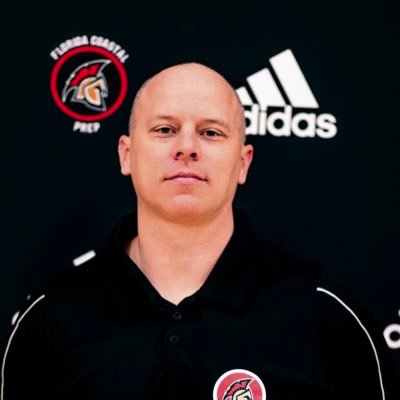
Coach Lee is in his seventh year as Director and Director of Operations at Florida Coastal Prep Sports Academy. With 25+ years of coaching at the D1, D2, NAIA, and JUCO levels, he has developed players who have gone on to programs including Missouri (Sean East, currently in the NBA G-League), DePaul, Houston Baptist, and SIU Edwardsville. He won a state championship in 2011 and is an Amazon best-selling author of 5 basketball coaching books, including the Princeton Offense Mastery Blueprint. Lee is a U.S. Army Reserve veteran. Kenny Anderson, NBA veteran and 1994 NBA All-Star, serves on the FCP coaching staff.