D1 vs D2 vs JUCO vs NAIA: What Each Level Actually Recruits at Prep Tournaments
The most common conversation I have with parents is the one nobody wants to have. "What level can my kid really play?"
It's the right question. The wrong answer wastes years of recruiting effort and thousands of dollars in showcases. The right answer changes a player's trajectory.
This post walks through how D1, D2, JUCO, NAIA, and DIII programs actually behave at prep tournaments, what they're looking for, when they show up, and what your player's realistic options look like at each level. If you read this and reset expectations where you need to, you'll spend the next year of recruiting effort more wisely.
The reality of the recruiting pyramid
Roughly speaking, here's the available roster space across the levels of college basketball each year:
- D1 (around 350 programs): ~4,800 active scholarships. Roughly 1,200 new scholarships open per year.
- D2 (around 300 programs): ~3,000 active scholarships. Roughly 750 new openings per year.
- JUCO (around 400 programs): ~4,000 scholarships. High turnover, roughly 2,000 new spots per year due to 2-year cycle.
- NAIA (around 200 programs): ~2,000 scholarships. Roughly 500 new openings per year.
- DIII (around 400 programs): Non-scholarship roster spots in the thousands. Recruiting is academic-fit driven.
The math means most prep players who get to college basketball get there at D2, JUCO, or NAIA, not D1. Knowing this changes how you should approach every tournament.
How D1 actually recruits at prep tournaments
What they're doing
D1 staffs are working off boards they've been building for 12-24 months. A player at a prep tournament who hasn't been on their board isn't going to be discovered there. Highly ranked underclassmen may still draw attention for future recruiting cycles.
D1 head coaches almost never travel to a generic prep tournament. Assistant coaches and recruiting coordinators do, but they're verifying targets they already have. They want to see:
- Real height (not the marketing height) with shoes on
- Athletic markers in person, vertical, lateral quickness, hand size
- Decision-making under pressure that matches what they've seen on film
- Body language during adversity
D1 evaluation at a prep tournament is mostly disqualifying, not qualifying. The film already qualified the player. The in-person visit either confirms or disqualifies.
What this means for your player
If your player is genuinely D1-level, get film into the hands of D1 staffs before the tournament. Cold-emailing a D1 staff during the tournament is too late. The system that works:
- September-October: build the realistic D1 list (10-20 programs)
- Cold email with introduction film 4-6 weeks before any showcase
- Confirm interest from any responding staff before the showcase
- At the tournament, your player is verifying interest that's already there, not creating it
How D2 actually recruits at prep tournaments
What they're doing
D2 is where prep tournaments matter most for live evaluation. D2 staffs are smaller (often just a head coach plus one assistant). Recruiting budgets are tighter. They recruit regionally because they have to.
A D2 head coach in Florida will absolutely drive 4-6 hours to a regional prep tournament if there are 3-4 realistic targets to evaluate over the weekend. They watch one full game and call it enough, they want to see decision-making in real game flow, defensive effort when the score is tight, and body language during a bad stretch.
What this means for your player
D2 is the level where the recruiting funnel actually opens at prep tournaments. Build a D2 list of 30-50 programs in regions your player would consider. Email them 2-3 weeks before the tournament with the schedule and the YouTube live stream link. Many D2 coaches will at least pull up the stream to scout passively. Some will travel for the weekend.
This is also the level where post-tournament outreach (the 24-hour recruiting email) is most effective. D2 staffs have time to read those emails and respond.
How JUCO actually recruits at prep tournaments
What they're doing
JUCO is the most active in-person scouting level at prep tournaments. JUCO programs have a 1-2 year roster turnover, they're always recruiting. A good JUCO program might place 8-12 players a year into D1, D2, or NAIA programs. Their pipeline depends on constant scouting volume.
JUCO coaches will travel to prep tournaments in their region. They'll watch multiple games. They'll talk to your players after games. They'll exchange business cards with you in the parking lot.
What this means for your player
If your player needs a development pathway, academic catch-up, body development, skill refinement, JUCO is often the smartest path. The recruiting at prep tournaments works in both directions: JUCO coaches actively recruit prep players, and prep players actively recruit JUCO connections for after their PG year.
One thing to know: JUCO basketball has a wide quality spread. Top NJCAA Division I programs are competitive with mid-major D1 programs in talent level. The bottom of the JUCO ranks is comparable to bad NAIA or strong club ball. The program matters as much as the level.
How NAIA actually recruits at prep tournaments
What they're doing
NAIA programs are quietly the most aggressive recruiters across the entire prep tournament space. They have more roster flexibility than D1 or D2 (no NCAA cap rules), more scholarship money than DIII (which has none for athletics), and bigger budgets than JUCO (which typically caps at 2 years).
NAIA head coaches travel widely. They recruit prep players, transfers, international players, and post-grad players all simultaneously. The best NAIA programs are competitive with mid-major D1.
What this means for your player
Include NAIA programs alongside realistic D2 options. Many players who think they're chasing D2 actually end up at NAIA and have great experiences there. If your player is in the gray area between D2 and JUCO, NAIA is often the right answer because:
- 4-year program (no transfer required after 2 years)
- Real basketball scholarships available
- Strong recruiting attendance at prep tournaments
- Some NAIA players go pro overseas after college
How DIII actually recruits at prep tournaments
What they're doing
DIII is fundamentally different from the other levels because it's academic-fit-driven. DIII programs don't offer athletic scholarships (NCAA rules), so the recruitment conversation is about academic merit, financial aid, and the player's interest in the school as a whole.
DIII coaches at prep tournaments are looking for academic-strong players who fit their program culturally. They have time to develop players. Roster spots are real but small.
What this means for your player
If your player has strong grades (3.5+ GPA, solid test scores) and the school fits their academic goals, DIII is a real option. The financial aid math at high-end DIII schools (Williams, Amherst, Pomona, etc.) can actually beat the athletic scholarship at a low-end D2 in net cost.
The conversation at a prep tournament with a DIII coach is different. They want to know about academics first, basketball second. If your player can't articulate why they want to be at that school for academic reasons, the conversation doesn't go anywhere.
How to assess your player's level
This is the hardest conversation in coaching. Use this rough framework:
D1 territory: 6'2"+ guard with verifiable 32"+ vertical, can score consistently against good D1 competition. A 6'7"+ wing with real wingspan, mobile, can defend multiple positions. A 6'9"+ post with skills, mobility, and motor. Ranking matters, if your player isn't ranked in any reputable scouting database by the start of senior year, D1 is a long shot.
D2 / NAIA territory: Skilled players with measurable athletic markers (28"+ vertical, solid frame), strong basketball IQ, can produce consistently against good competition. Often the "not quite D1 but clearly college basketball" category.
JUCO territory: Talented players who need development time, either academic, physical, or skill-based. JUCO is often a 1-2 year stop on the way to D1/D2.
DIII territory: Smart, skilled players who prioritize academics and a small-school experience. Many strong players who could play D2 athletically choose DIII for the academic fit.
What every tournament should help with
Regardless of level, here's what a tournament should provide for your player's recruiting:
- Verifiable competition. Brackets and rosters published so coaches can confirm who your player played against.
- Game film on demand. Live-streamed games archived on YouTube so any coach, in person or not, can watch.
- Statistics. Box scores that show up in a search.
- Honest tournament direction. Coaches who give you straight assessments of where your players sit.
If a tournament doesn't provide those four things, it doesn't matter what level it's marketed at, it won't move your players' recruiting forward. (More on what to look for in the buyer's guide.)
Built for the streaming era
The National Prep Tournament streams every game free on YouTube, archived afterward. Verifiable competition, dependable production, MVP awards each game. Registration is $275 per team.
Register Your Team · $275One more thing
I'll close with this. The most underrated principle in basketball recruiting: fit matters more than level. A player who's a great fit at the right D2 program will have a better career than the same player at a worse D1 program where they don't play. A JUCO program that develops a kid into a contributing player matters more than a Division I roster spot they ride the bench at.
Don't chase the level. Find the right fit. Run the recruiting playbook accordingly.
Coach Lee
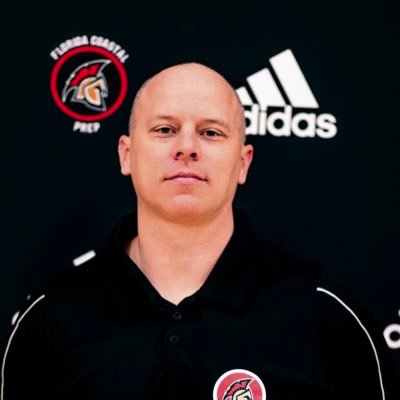
About Coach Lee DeForest
Coach Lee is in his seventh year as Director and Director of Operations at Florida Coastal Prep Sports Academy. With 25+ years of coaching at the D1, D2, NAIA, and JUCO levels, he has developed players who have gone on to programs including Missouri (Sean East, currently in the NBA G-League), DePaul, Houston Baptist, and SIU Edwardsville. He won a state championship in 2011 and is an Amazon best-selling author of 5 basketball coaching books, including the Princeton Offense Mastery Blueprint. Lee is a U.S. Army Reserve veteran. Kenny Anderson, NBA veteran and 1994 NBA All-Star, serves on the FCP coaching staff.