6 Drills to Run the Week Before a Tournament
The week before a tournament is the wrong time to install new offense, new defense, or new anything. What it IS the right time for: sharpening the specific things that break down in tournament games but not in regular-season games.
Here are six drills I run in my final week before every tournament. Nothing fancy. All are things that reveal weaknesses under tournament pressure, and give you 5-7 days to shore them up.
1. The 30-second scramble drill
What it fixes: The last-possession-of-the-half chaos where every tournament game gets decided.
Set the game clock to 30 seconds. Score is tied. Ball comes in from the sideline. Two situations to practice: your team is up 2 (protect the lead), your team is down 2 (need a score).
Run it 8-10 times. Two possessions each: one offense, one defense. Rotate who's shooting the final shot.
Why it matters: Tournament games are decided in the final 90 seconds. Most teams practice half-court sets endlessly and never practice the specific "6 seconds left, need to inbound and get a decent shot" scenario. Wins can come from the team that's practiced it.
2. Foul-trouble simulation
What it fixes: The complete disarray that hits a team when their best player picks up their third foul in the first half.
Pick a scrimmage. Announce that your starting point guard has "just picked up his third foul" and can't return until the second half. Play the rest of the half without him.
Then do it again with your center. Then again with your best scorer.
Why it matters: Tournament refs are inconsistent (we covered this in the buyer's guide) and foul trouble is the single biggest wildcard. Teams that have practiced without their starters know how to play the second unit. Teams that haven't fall apart when their star sits.
3. 4-on-4 half-court, no dribble
What it fixes: Offensive stagnation when defenses lock in.
4-on-4 in the half court. Nobody can dribble. Everything is pass, cut, catch, shoot. Play to 5 baskets.
This forces movement without the ball, better passing angles, and eliminates the hero-ball tendency that shows up in tight tournament games.
Why it matters: Tournament defenses are typically better than regular-season defenses (better teams travel to prep events). Your kids will need to move without the ball more than they do in league games. Practice it now.
4. Free-throw shooting under stress
What it fixes: The 62% free-throw shooter who becomes a 41% shooter when the game is on the line.
Every player shoots 10 free throws. Whatever percentage they hit, they have to run one full-court sprint per miss immediately after. Then they shoot 10 more.
Track it. Compare the fresh-legs percentage to the after-sprint percentage. Then have your worst free-throw shooter shoot two while the whole team stands at the line watching.
Why it matters: Tournament games get to the line more than league games because the refs call things tighter (see red flags on inconsistent officiating). Your free-throw percentage in the final minute is a major predictor of wins. Practice under stress, not with fresh legs.
5. Full-court press break, cold
What it fixes: The team that panics against 30 seconds of full-court pressure and turns it into a 12-2 run for the other team.
Start possessions with the defense already in a full-court press. No dead-ball inbound preparation. Just go. Your team has to break the press cold.
Run 8 straight possessions like this. Track turnovers vs. successful breakthroughs.
Why it matters: Tournament games see more press defenses than regular league games because underdogs use them to try to steal games. Teams that have their press break wired can extend leads. Teams that don't lose games they should have won.
6. Situational whiteboard drill
What it fixes: Kids not knowing what the coach wants in specific late-game situations.
No basketball involved. Whiteboard, chairs. Coach draws up scenarios: "You're up 3, 12 seconds left, they have the ball. What are we in? Who's guarding whom?" and "You're down 4, 40 seconds left, we have the ball. What's our first look? Second look?"
Have players draw the answer. Not the coach. Players draw. If they can't draw it, they don't know it.
Why it matters: The gap between "the coach knows" and "the players know" is where tournaments are lost. If your point guard can't articulate what to do when you're down 2 with the ball and 8 seconds left, he can't execute it under pressure. Test it in the film room, not for the first time in a game.
What NOT to do the week before
A few common mistakes:
- Don't install new offense. If it's not in the playbook by tournament week, it doesn't get run in the tournament.
- Don't run conditioning that leaves your team legs-dead for Friday. Sharpen, don't wear down.
- Don't scrimmage against a weaker JV team all week. Bad reps against bad defense makes your team overconfident.
- Don't over-scout the first-round opponent. One or two things they do well. That's it. Playing your game beats playing anti-them.
The final practice
The night before travel or the morning of a home tournament, run one 60-minute practice. Non-negotiable elements:
- Warm-up (10 min)
- Free throws with a purpose (5 min)
- Half-court offense, run through the sets you'll actually use (15 min)
- Situational drills 1, 2, and 5 above, the ones most likely to show up in real games (20 min)
- Free-throw finish, everyone shoots 5, everyone leaves loose (10 min)
Send them home. Get them rested. Don't over-coach the night before.
Test your work in March
The National Prep Tournament is March 5-7, 2027 in Fort Walton Beach, FL. Twelve-team field, single court, every game on YouTube. Registration is $275 per team.
Register Your Team · $275One last thing
Review your team film the Sunday before the tournament. Watch three of your team's own games from the past month. Not opponent tape. Your own tape.
Ask your players: "What are we good at right now? What are we not?" Then design the week's practices around answers to that question.
Your team probably already knows what it needs to work on. The best coaches are the ones who listen when the players tell them.
Coach Lee
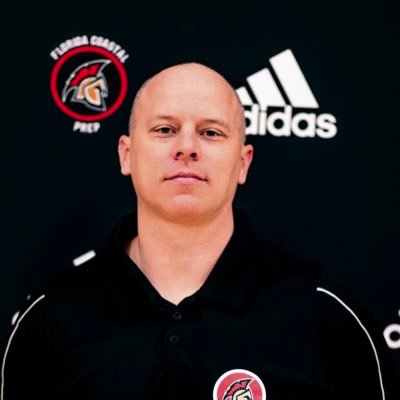
About Coach Lee DeForest
Coach Lee is in his seventh year as Director and Director of Operations at Florida Coastal Prep Sports Academy. With 25+ years of coaching at the D1, D2, NAIA, and JUCO levels, he has developed players who have gone on to programs including Missouri (Sean East, currently in the NBA G-League), DePaul, Houston Baptist, and SIU Edwardsville. He won a state championship in 2011 and is an Amazon best-selling author of 5 basketball coaching books, including the Princeton Offense Mastery Blueprint. Lee is a U.S. Army Reserve veteran. Kenny Anderson, NBA veteran and 1994 NBA All-Star, is on the FCP coaching staff.