Why We Built the National Prep Tournament
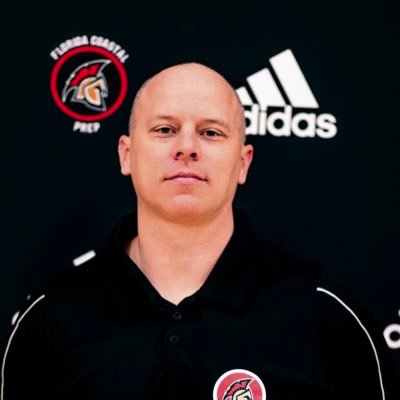
I want to tell you why this tournament exists.
I've been coaching for 25 years. Most of that has been on the road, D1, D2, NAIA, JUCO, and the last several years running Florida Coastal Prep here on the Panhandle. I've taken teams to a lot of tournaments. I've sat on the bench for the good ones and the bad ones.
A few years ago I started thinking about what was missing.
The thing I kept noticing
Most prep tournaments fall into one of two buckets. There's the big national event, eight courts, forty teams, strong college coach attendance, but it costs a fortune to enter and your kids end up playing one good game and two blowouts because the field is too wide to seed cleanly.
And there's the smaller circuit event, cheaper, easier to access, but you don't really know what you're getting until you show up. Production is hit-or-miss. The "college coaches in attendance" line in the marketing email doesn't always pan out.
What I wanted to enter my own team in was something in the middle. A small, well-run weekend where the basketball was good, the games were on tape so coaches who couldn't make it down here could still watch, and the per-team cost didn't bleed the program dry.
I couldn't find one. So I started building it.
What I want this to be
I want this to be a tournament where, when you leave Sunday night, you've had three or four good games. Not blowouts in either direction. Competitive games against teams roughly at your level, with film you can use for the next year of recruiting.
I want every game on YouTube, free, archived, because that's how recruiting actually works now. A D2 coach in Iowa who can't fly to Florida in March can still watch your kid Tuesday night after practice. That's the part of the recruiting world that's changed the most in the last decade, and it's the part most prep tournaments still haven't adapted to.
I want game MVPs each game and an All-Tournament Team on Sunday. Not because awards are a big deal, but because recognition is. Kids play different when there's something to chase, and "first-team all-tournament" is something they can put on a player profile that lasts.
I want a field that fits, not a field that fills. Twelve teams across two divisions. That's it. I'd rather turn a team away than stack a bracket I can't seed properly.
And I want it to cost what it should cost. The entry fee is $275 per team. We could charge more and people would probably pay. But the programs I most want at this tournament, smaller prep academies, public school programs with limited budgets, post-grad teams without shoe deals, can't justify $1,200 for a single weekend, and I don't blame them.
Kenny
Kenny Anderson came on as part of our coaching staff at Florida Coastal Prep a couple years ago.
If you know basketball, you know Kenny. He was the second pick in the 1991 draft. He played 14 seasons in the NBA. He was an All-Star. He coached at Fisk. He's seen the recruiting game from every angle there is, as a top recruit himself, as a pro, as a head coach.
Having him around the program means something for the kids we develop, but it also means something for how we think about this tournament. When Kenny says recruiting changed the day live streams went mainstream, I listen. He's right. And we built the tournament around that reality.
What this isn't
I want to be straight about what we're not.
We're not the biggest. We're not trying to be. If you want a tournament where forty D1 coaches walk the sideline in two days, you're looking for City of Palms or Beach Ball Classic. Those are great events. They're not us.
We're also not in a big destination market. Fort Walton Beach is a beautiful beach town on the Panhandle, but it's not Miami or Orlando. Some teams love that, it's quieter, cheaper, the weather's perfect in March. Some teams want neon lights. If that's you, we're probably not the right fit.
And we don't pretend college coaches are coming who haven't told us they're coming. Maybe ten or fifteen show up in person. The rest watch the stream. That's how this works, and we'd rather tell you that than wave logos at you.
If you're thinking about it
Registration is $275 per team. Register online or call me at 850.961.2323 with questions.
It's not a hard sell. If we're not the right fit, we're not the right fit, and I'll tell you that on the phone. There are a lot of good March options for prep teams, and I'd rather you end up at the right one than feel pressured into the wrong one.
But if you want a small, well-run, intimate weekend of basketball where every game ends up on tape and the production is built around making your players look like the players they are, that's what we're trying to be. The door is open.
See you in March.
Coach Lee
About Coach Lee DeForest
Coach Lee is in his seventh year as Director and Director of Operations at Florida Coastal Prep Sports Academy. With 25+ years of coaching at the D1, D2, NAIA, and JUCO levels, he has developed players who have gone on to programs including Missouri (Sean East, currently in the NBA G-League), DePaul, Houston Baptist, and SIU Edwardsville. He won a state championship in 2011 and is an Amazon best-selling author of 5 basketball coaching books, including the Princeton Offense Mastery Blueprint. Lee is a U.S. Army Reserve veteran. Kenny Anderson, NBA veteran and 1994 NBA All-Star, serves on the FCP coaching staff.