How to Write a Tournament Entry Application That Doesn't Get Rejected
Not every prep tournament is open registration. The good ones aren't. They accept applications, review them, and invite the field based on fit, competition level, geographic mix, roster stability, and reputation.
Which means: your application is the pitch. Get it right and you're in. Get it wrong and you're a name on a "not this year" list.
I've reviewed enough applications now to know what actually gets a "yes" from a tournament director. Here's what to do, and what to leave out.
Start with the basics done right
Before we get to the strategic stuff: fill out the form completely. Every field. The number of applications I get with missing information is embarrassing.
- Full program name (spelled correctly, matching your official registration)
- Head coach name and phone number that someone actually answers
- Program address (not a P.O. box)
- Team roster or projected roster (even if it's not final)
- Prior tournament history
- Program website
Missing fields signal a disorganized program. Tournament directors extrapolate: if you can't complete an application, you can't manage a travel weekend either.
Tell the truth about your level
This is the biggest self-inflicted mistake in tournament applications: overselling.
Programs write things like "Our players are being recruited by top D1 programs across the country" when the honest answer is "We have three seniors with legitimate D2 interest and a junior generating early D1 conversation."
The oversell doesn't help. Tournament directors know the players, know the programs, and know when applications are inflated. Inflation makes you look either dishonest or out-of-touch. Either kills the application.
Say what's true. Specific names, specific programs interested, specific offers. If you don't have D1 interest yet, don't claim you do. If your program's realistic ceiling is regional D2/JUCO, own it, that's a legitimate story that gets you into legitimate tournaments.
Show fit, not credentials
The single biggest mistake I see: applications that read like resumes. "We won the state championship in 2019. We've placed 47 players in college. Our program has been ranked #12 in the state."
All fine. None of it answers the tournament director's actual question: "Is this program a good fit for THIS tournament?"
Fit is:
- Roster level roughly matching the field you're applying to
- Geographic diversity (a director filling a bracket wants teams from different regions)
- Playing style variety (a tournament with only run-and-gun teams is boring)
- Program reputation (do you show up on time, follow the schedule, treat officials with respect)
Write about those things directly. "We're a New England program interested in your March tournament to give our seniors additional Southern exposure before signing day. Our roster this year has a good mix of size and shooting, and we play a half-court motion offense that will give the field a different look."
That's a real answer to "why should we take you." Credentials are a checklist. Fit is a conversation.
Have a plausible answer for "why us"
Some applications say "We're interested in your tournament because it's a great event and we'd like to be part of it." That's an application that reads like it went to 20 tournaments the same day.
The stronger version: "We're specifically interested in your tournament because [specific, verifiable reason]."
Legitimate reasons:
- Geographic fit, the tournament is in a region your seniors need recruiting exposure in
- Field fit, you've reviewed the previous year's field and think your roster matches the competition level
- Streaming quality, you're prioritizing tournaments with strong live-stream archives (all tournament directors love hearing this)
- Timing, the tournament date fits your program's season plan for a specific reason
- Personal connection, a coach on your staff played in it, or a program you respect recommended it
Any of these signals a considered application. "You have a great event" signals a mass application.
Address the operational stuff proactively
Tournament directors are secretly worried about the same three things with every applicant:
- Will they show up? (No-show programs are a nightmare for the bracket)
- Will they pay on time? (Or will you be chasing a check the week before the tournament?)
- Will they be trouble? (Coaches or players who create referee incidents, hotel complaints, or drama)
Preempt these. In the application, mention:
- Your travel plan (flying/driving, arriving Thursday night)
- Your payment plan (pay in full on acceptance, or 50/50 split)
- References from tournaments you've played in recently (with contact info if possible)
Every program that includes tournament references gets bumped up in my personal ordering. It says "I know how this works and I'm serious."
Call Before Applying
This is the single biggest thing I recommend and almost nobody does it.
Call the tournament director. Introduce yourself. Ask 2-3 questions about the event. Mention you're planning to apply.
The phone call does two things: it puts a face (well, a voice) on your program in the director's memory, and it lets them tell you honestly if you'd be a fit. If they say "Honestly, our field is pretty regional this year and I'm not sure your program from the Midwest would be a natural fit," you just saved yourself a rejection.
If they say "Actually we're looking to broaden the field geographically this year, would love to see your application," you now have a director rooting for you when it comes across their desk.
A 6-minute phone call improves your acceptance rate more than a perfectly-worded 500-word application essay does.
What to leave out
Applications that get harder-to-accept scores from me:
- Sales-y language about "elite competition" and "exposure." Every application uses these words. They cancel each other out.
- Long paragraphs about your program's history when the tournament asked one question. Answer the question briefly, offer to send more.
- Claims that can be verified but weren't checked. "We finished ranked #4 in the state last year", and then a Google search shows you finished #12. That kills the application.
- Testimonials from other coaches embedded in the application. Nobody reads them. Save that for references we ask for.
- Complaints about other tournaments. "We had a bad experience at [Tournament] last year and are looking for something better." Big red flag. It signals your program is high-maintenance.
After you submit: follow up once
Submit the application. Give the tournament 5-7 business days to respond. Then send ONE follow-up email:
Coach [Last Name],
Just circling back on our application from last week. Understand you're likely reviewing several. Happy to answer any questions or send additional information about our program. Thanks for the consideration.
[Your Name]
[Program]
[Phone]
One follow-up. Not three. Not weekly. One, then wait.
If you don't hear back within 3-4 weeks, that's your answer. Move on and apply elsewhere. Chasing tournaments that don't respond doesn't get you in and hurts your reputation.
Applications open through October 31, 2026
The National Prep Tournament entry fee is $275 per team. Register online when your program is ready.
Register Your Team · $275The bigger frame
Tournament applications are a small window into how you'd run your program at their event. Directors read your answers for details about your roster, travel plans, and how your program operates.
A well-written application from a mid-tier program gets picked over a poorly-written one from a top-tier program more often than you'd think. Care about the details. It's the first impression, and it counts.
Coach Lee
About Coach Lee DeForest
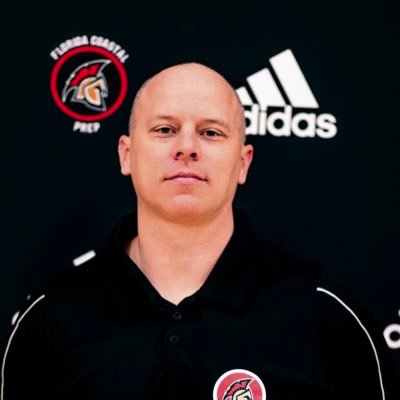
Coach Lee is in his seventh year as Director and Director of Operations at Florida Coastal Prep Sports Academy. With 25+ years of coaching at the D1, D2, NAIA, and JUCO levels, he has developed players who have gone on to programs including Missouri (Sean East, currently in the NBA G-League), DePaul, Houston Baptist, and SIU Edwardsville. He won a state championship in 2011 and is an Amazon best-selling author of 5 basketball coaching books, including the Princeton Offense Mastery Blueprint. Lee is a U.S. Army Reserve veteran. Kenny Anderson, NBA veteran and 1994 NBA All-Star, is on the FCP coaching staff.